

A Confluence of Visual Ethnography and Cultural Memory
The Amazigh Women Archive is an independent digital documentary archive developed from four years of fieldwork in Tiflet, Morocco (2018–2022). Through documentary photography and visual ethnography, the archive records the everyday lives, labor, material culture, and embodied knowledge of Amazigh women whose experiences have often remained underrepresented within formal archival collections.
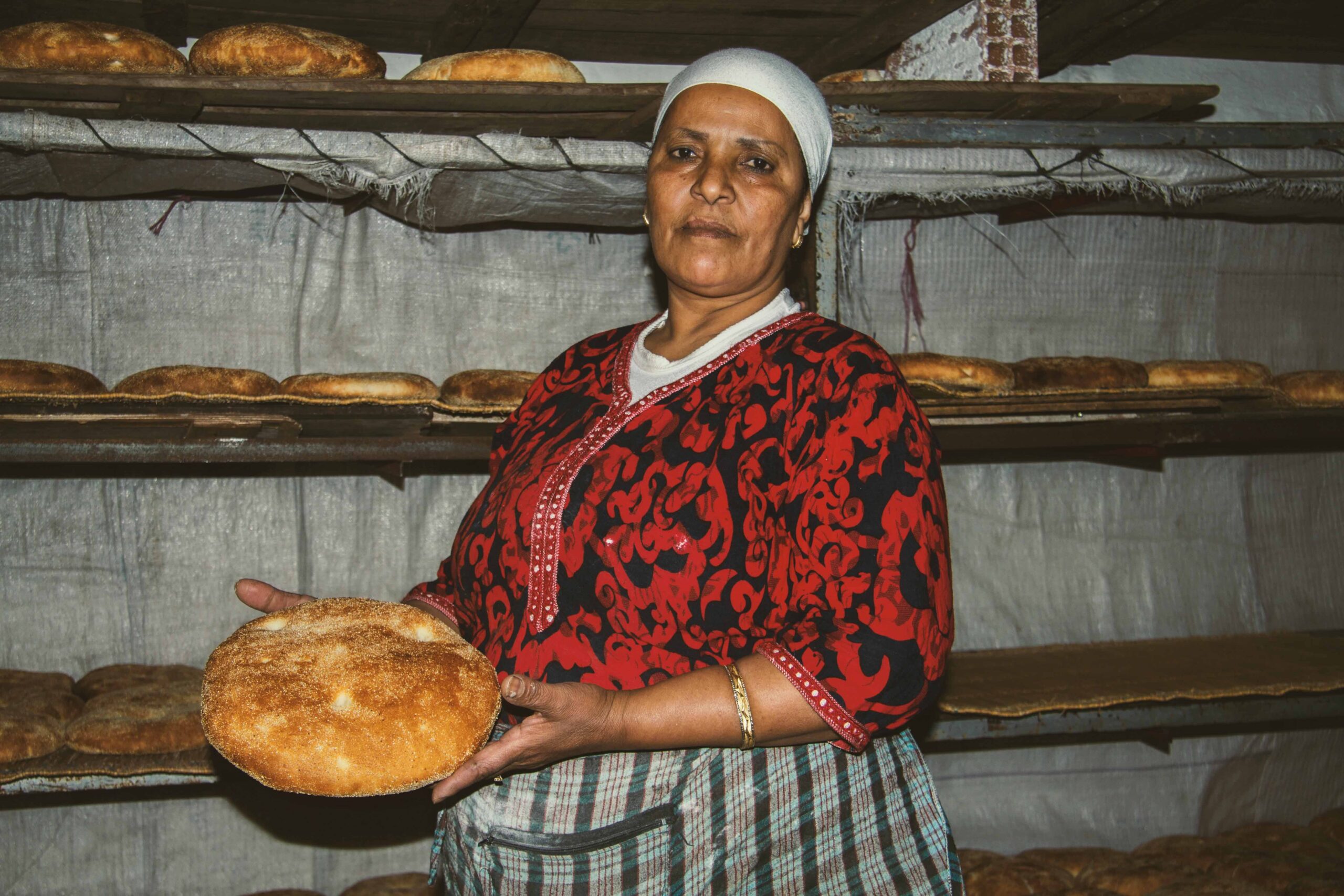
The project responds to these archival silences by treating everyday practices not as peripheral aspects of cultural life, but as forms of documentary heritage and cultural memory. Through the documentation of breadmaking, textile work, rural labor, and relationships between people, objects, and place, the archive seeks to preserve forms of knowledge transmitted through lived experience and intergenerational practice.
Research Context
The Amazigh Women Archive developed in connection with doctoral research at Mohammed V University in Rabat on the image and representation of Amazigh women.
It extends this research beyond cinematic representation by using documentary photography and visual ethnography to examine how Amazigh women’s lived experiences, everyday labor, and cultural knowledge can be documented and preserved.
The archive is particularly concerned with forms of knowledge that are transmitted through practice rather than written records. Gestures involved in breadmaking, textile production, agricultural labor, relationships with material objects, and knowledge of local environments constitute forms of embodied cultural knowledge that can remain largely invisible within conventional documentary collections.
By documenting these practices visually and preserving them within a digital environment, the project explores how documentary photography can function not only as representation but also as documentary evidence, archival practice, and cultural mediation.
Methodology: The Camera as an Analytical Tool
Photography within the Amazigh Women Archive is approached not merely as illustration but as a method of visual inquiry and cultural documentation.
The photographic process focuses on everyday practices as they unfold within their social and material environments, with particular attention to the relationships between bodies, gestures, objects, spaces, and forms of cultural knowledge.
The visual methodology is guided by four interconnected principles:
- Embodied Knowledge: Documenting gestures, repetitive movements, manual techniques, and forms of knowledge transmitted through practice and intergenerational learning.
- Material Culture: Recording the tools, objects, textiles, foodways, working environments, and material relationships through which everyday cultural practices are performed.
- Agency and Presence: Representing participants as active subjects within the documentary record, with attention to gaze, presence, environment, and the ways individuals inhabit the spaces in which they live and work.
- Relational Practice: Recognizing documentary photography as a process shaped by sustained engagement, trust, consent, and the relationship between photographer and participant.
Archival Practice
The archival value of documentary photography depends not only on the image itself but also on the contextual information that allows it to remain interpretable over time. Each collection within the Amazigh Women Archive is therefore accompanied by descriptive information identifying its geographical location, period of documentation, documented practice, and methodological context.
As the archive develops, this documentation framework is intended to support the organization, discoverability, contextual interpretation, and long-term preservation of its visual records. The archive is conceived as an evolving research resource rather than a static collection of photographs, with future phases extending both its geographical scope and its documentation of Amazigh women’s cultural practices across Morocco.
Ethics and Representation
The archive is guided by principles of informed consent, respectful representation, and contextual integrity. Participants are approached not simply as photographic subjects but as individuals whose knowledge, labor, and lived experiences form part of the documentary record. Particular attention is given to avoiding decontextualized or exoticizing representations and to preserving the relationship between images and the cultural environments in which they were produced.
The Researcher
Hind Bouqartacha
PhD Candidate | Senior Photographer & Videographer
Hind Bouqartacha is a Moroccan visual researcher and the founder of GUILE STUDIO in Rabat. With a Master’s degree in Documentary Film from Tetouan, her work sits at the intersection of cinematic theory and documentary practice.
Her photography has been exhibited internationally, from London to São Paulo.
Through the Amazigh Women Archive, she brings together her professional practice in documentary photography and her academic research in visual representation, cultural memory, and Amazigh women’s studies. Her work explores how visual documentation can contribute to preserving embodied knowledge, challenging archival silences, and expanding the representation of Amazigh women within contemporary documentary heritage.
Phase 1: Tiflet Fieldwork (2018-2022)
© 2026 Hind Bouqartacha / Amazigh Women Archive. All rights reserved.